Roofing in Dayton and the Miami Valley.

Storm response, leak tracing, and replacements for ranches, two-stories, and historic neighborhoods, with crews who already know which slopes take the wind.

Get a free quote
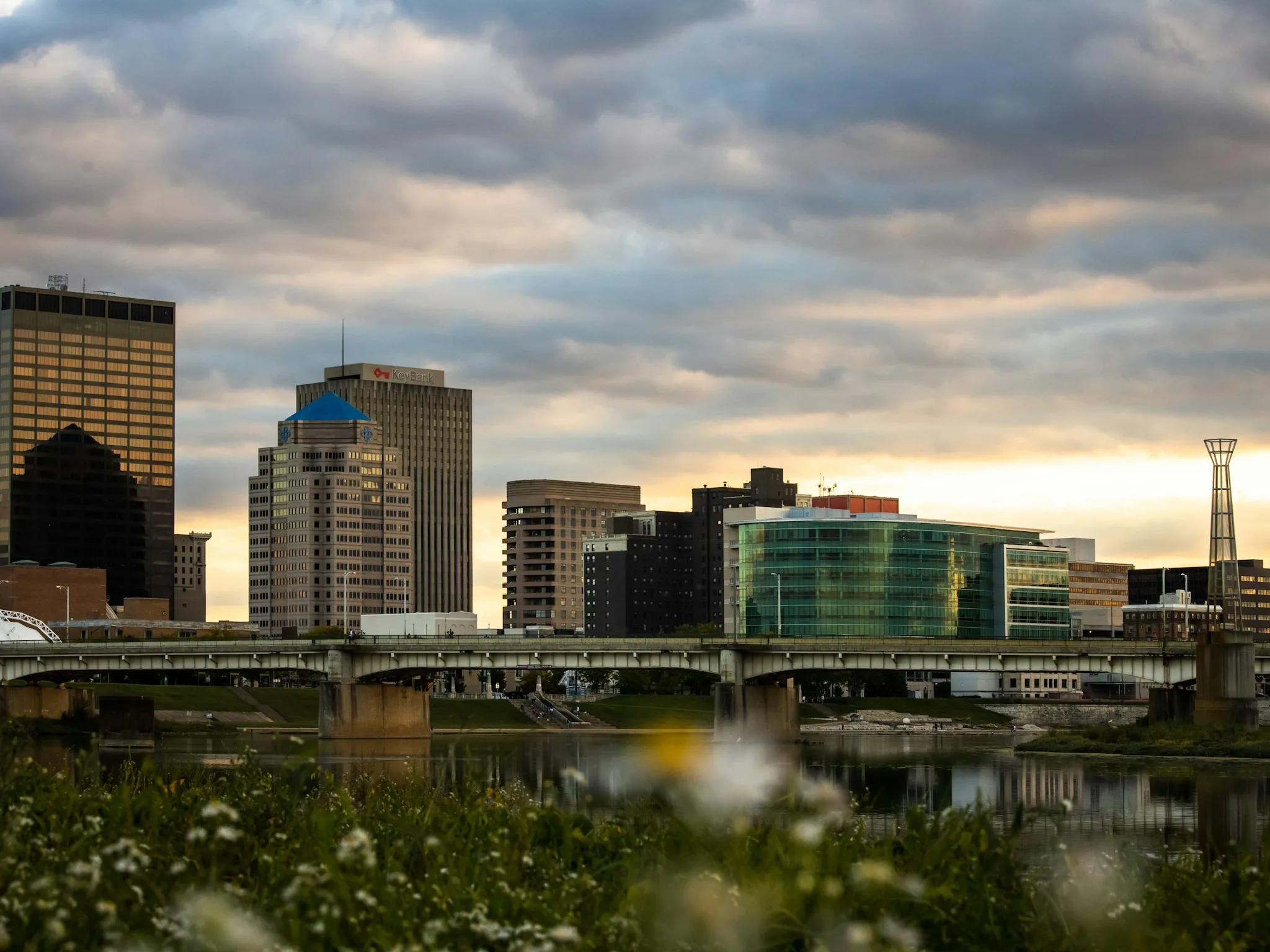
Downtown Dayton, Ohio skyline along the Great Miami River

Working here

What roofing is like in Dayton

Weather, housing stock, and the failures we actually see on this route.

TL;DR

  1. 01

    Wind events that crease tabs on west slopes without taking the whole roof

  2. 02

    Mystery leaks at roof-to-wall joints in Foursquares and additions

  3. 03

    Historic-district rules that favor repair and matching over a cheap tear-off

Valley storms, lake-effect flurries, not much snowpack

Official climate figures come from Dayton International Airport, about 10 miles north of downtown and often cooler than the valley floor. Winters are cloudy with flurries; accumulation is usually modest. The threat is ice at eaves, freeze-thaw, and spring-to-fall thunderstorms and tornado risk typical of the Midwest, not a mountain snow load.

Historic districts next to postwar ranches

Dayton's historic neighborhoods (Oregon District, Wright-Dunbar, Dayton View, South Park, St. Anne's Hill, and others) carry Neoclassical, Queen Anne, Foursquare, Craftsman, and Prairie houses, often with complex roofs, slate or aged asphalt, and tight lots. The rest of the valley is ranches and split-levels. The city has 13 local historic districts where exterior changes can require a Certificate of Appropriateness.
Local roofing challenges

  • Wind events that crease tabs on west slopes without taking the whole roof
  • Mystery leaks at roof-to-wall joints in Foursquares and additions
  • Historic-district rules that favor repair and matching over a cheap tear-off
  • Hail and thunderstorms that look cosmetic from the street and functional on the roof
  • Tight urban lots where tear-off debris and magnet sweeps have to be contained

The climate

A year on Dayton roofs

  1. River valley Humidity off the Great Miami / Little Miami corridor keeps decking wet longer after a storm.
  2. Hot summers South and west slopes bake. UV ages tabs; vinyl siding waves if it was nailed tight.
  3. Freeze-thaw January ice at north eaves. Ice barrier and ventilation are the spec here, not an upgrade.
  4. Storm cells I-75 wind and hail. We photograph in grids so claims and HOAs get the same record.

Our method

How we spec Dayton differently

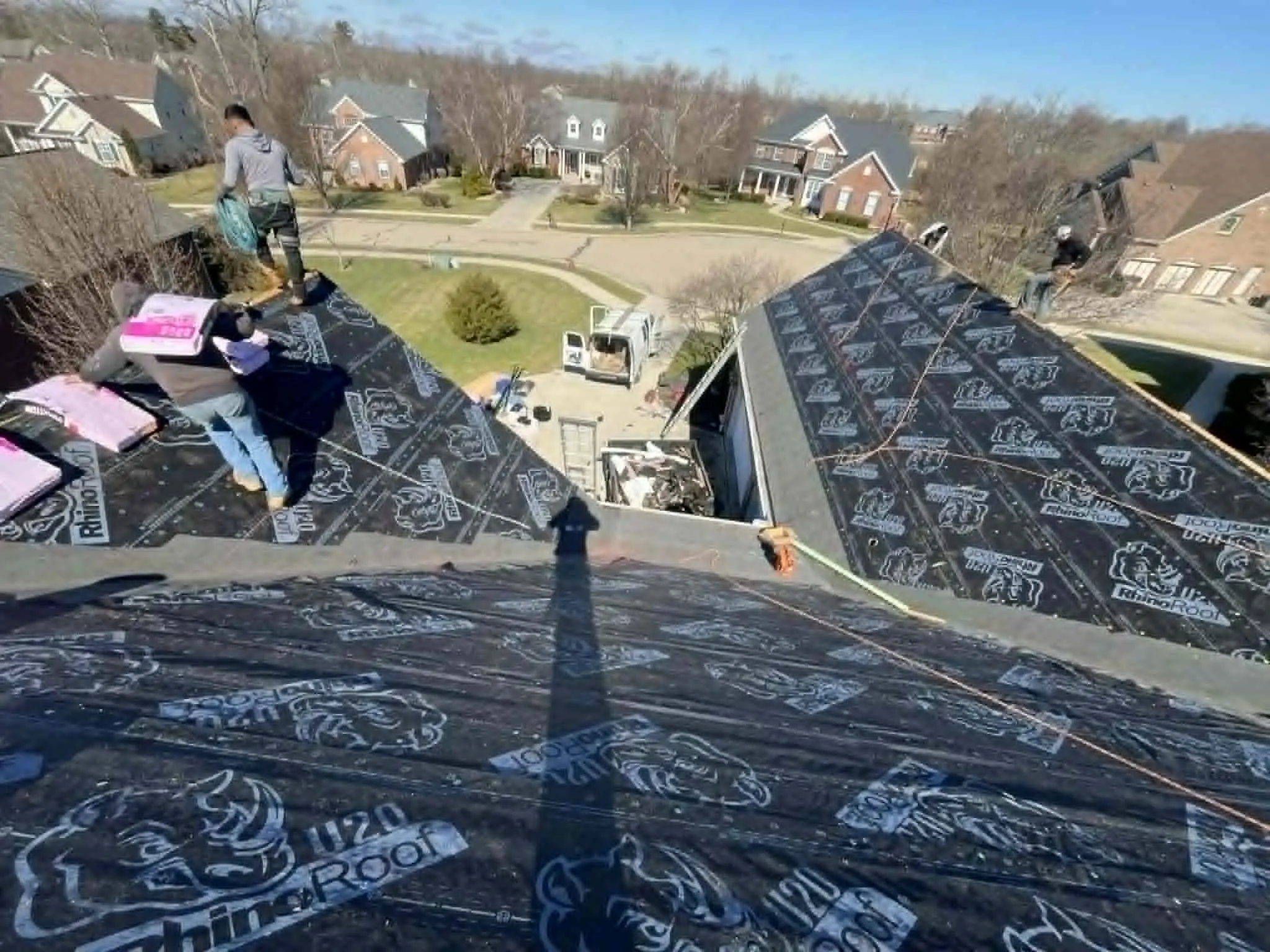
Official climate figures come from Dayton International Airport, about 10 miles north of downtown and often cooler than the valley floor. Winters are cloudy with flurries; accumulation is usually modest. The threat is ice at eaves, freeze-thaw, and spring-to-fall thunderstorms and tornado risk typical of the Midwest, not a mountain snow load. Crews stage from Franklin, so the ice-barrier, ridge-vent, and flashing details stay consistent on this route, not a one-off from a traveling crew. Dayton is also a good place to work: homeowners care about the house, the street, and a clean jobsite. That is why we stay.

The area

Roofs, seasons, and how Dayton is built

Asphalt on most homes, complexity on the historic ones

Architectural shingles dominate replacements. In historic districts you will still see slate, metal, and steep Victorian geometry. Leak calls are often flashing and chimney work, not a failed field. We trace before we sell a skylight or a tear-off.

Storm season is the calendar

Spring and early summer: thunderstorms, wind, hail, and insurance documentation. Winter: ice dams and eave leaks in the valley. Fall: gutter load from mature street trees. We keep claim-ready photo grids as part of Dayton storm calls, not an extra.

Wright-Dunbar and the Oregon District

Wright-Dunbar and the Oregon District

Wright-Dunbar preserves the West Third Street world of the Wright brothers and Paul Laurence Dunbar. The Oregon District mixes residential and commercial 19th-century fabric. Roofs there are rarely simple rectangles. Hips, valleys, and brick-wall flashing are the job.

Local landmarks

Facts that shape the work

Dayton Arcade

Opened in 1904, the Arcade is known for its Flemish Third Street facade and glass rotunda. It is a reminder that Dayton's building stock includes landmark roofs and ordinary houses on the same dispatch route.

Broad streets, canal bones

Downtown streets were platted wide enough for ox-drawn wagons and old barge canals. That history does not change shingle physics, but it does mean access, alley staging, and neighborhood rules vary block to block. We plan the job around the street, not a generic suburb template.

Homeowner resources

Dayton homeowner resources

City, county, storm, and reference links we actually send homeowners to.

Climate classification, historic neighborhoods, and Arcade notes summarized from Wikipedia's Dayton, Ohio article and City of Dayton historic-district guidance. Read the Wikipedia article.

Need a Dayton-area inspection?

Tell us the neighborhood. We will confirm coverage and the next open inspection window.